
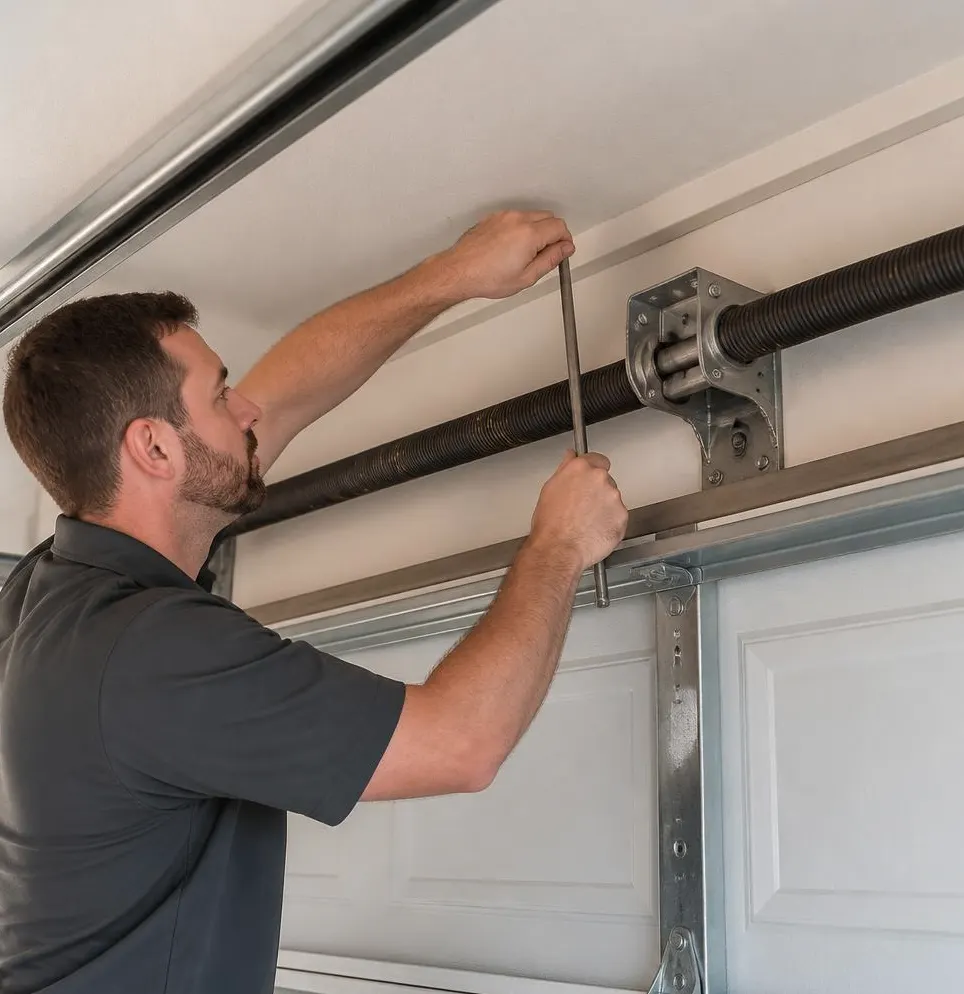
What a technician sees on this kind of call
The call usually starts the same way: one spouse is convinced the garage door is why the electric bill jumped, the other thinks that's nonsense because "it's just the garage." When a technician gets out there, the evidence is often obvious within thirty seconds — daylight visible along the bottom seal, a strip of weatherstripping that's cracked and pulled away from the panel, or gaps at the corners big enough to slide a finger through. On older doors, the rubber seal has usually hardened and shrunk from years of Texas summer heat, so it no longer makes full contact with the concrete. None of that looks dramatic. But it adds up.
Why a leaky garage door affects the house, not just the garage
If the garage is attached, it isn't a sealed-off box. It shares at least one wall, and often ductwork or the attic, with the conditioned part of the house. When outside air pours into the garage through gaps around the door, the garage itself swings closer to the outdoor temperature. In July and August that means a garage that sits well above 100°F for hours. That heat doesn't stay put — it radiates through the shared wall, warms the door leading into the kitchen or laundry room, and raises the air temperature on the other side of that wall. Your AC then has to work harder to hold the thermostat setting, even though the leak itself isn't in the living space.
The same thing happens in reverse during a cold snap, just with less drama since North Texas winters are shorter and milder. A few nights near freezing won't move the needle much, but it's the same physics either way: air exchange at the garage door changes the temperature of air that's in contact with your house.
Other ways the leak shows up
- Ductwork in the garage. Many homes route HVAC supply or return lines through the garage ceiling. If those ducts have any leaky joints, they're now pulling in garage-temperature air — superheated in summer — straight into the system.
- The water heater or laundry room. If either sits in or near the garage, a hot garage makes the water heater cycle more and makes the laundry room miserable to work in during summer afternoons.
- Dust and debris. Gaps that let air through also let in dust blown around by Texas wind, which settles on stored items and can work into opener components over time.
How to check without guessing
You don't need special equipment to settle the argument. Close the door at night and walk around the inside with a flashlight off — if you can see daylight at the bottom, sides, or top, that's an air gap, not just a cosmetic issue. Run a hand along the bottom seal; if it's stiff, cracked, or flattened on one side, it's not sealing. Check the corners specifically, since that's where seals fail first as the rubber ages and the door settles slightly over years of use.
What's worth fixing versus replacing
A worn bottom seal or brittle weatherstripping along the sides is usually a straightforward, inexpensive fix — replacing the seal restores most of the sealing performance without touching the door itself. If the gaps are from the door being out of alignment, with the track pulling away from the seal on one side, that's often a balance or hardware issue rather than something a new seal alone will solve. And if the door itself is an older uninsulated steel panel that's warped, dented, or simply never sealed well even when new, weatherstripping will only get you so far — at that point the bigger energy loss is through the panel material itself, not just the edges.
When to call Hurst Garage Door
If you've found daylight around the edges or the seal looks shot, that's a job for Garage Door Maintenance — a technician will check the weatherstripping, the bottom seal, and whether the door is sitting square in the frame, then replace what's worn so the door actually closes airtight. If the door is misaligned, dented from a storm, or an opener issue is keeping it from closing all the way, that's a Garage Door Repair call, and worth doing before the next heat wave or cold front rolls through. For homes with an older, uninsulated door that's leaking heat through the panels themselves, it's worth asking about replacement options during the visit.
If you're in Hurst, Bedford, Euless, North Richland Hills, Colleyville, Keller, Grapevine, or Southlake and want someone to settle the argument for good, call Hurst Garage Door for an inspection — we'll tell you straight whether it's a seal, an alignment issue, or time for a new door.