
The short answer: check your weatherstripping, test the door's balance, lubricate the moving parts, and confirm the opener's safety sensors are working — ideally before the first hard freeze or ice event moves through. Garage doors in this part of Texas don't deal with months of snow, but they do deal with sudden temperature drops, biting north wind, and the occasional ice storm, and that combination is harder on hardware than people expect.
Why North Texas Winters Are Rough on Garage Doors
Summers here are long and hot, which means metal parts, rubber seals, and lubricants spend most of the year expanding in the heat. When a cold front drops temperatures fast, those same parts contract just as quickly. That cycle dries out old lubricant, stiffens weatherstripping, and puts extra stress on springs that were already working hard all summer. Add in gusty wind and the occasional ice event, and a door that was fine in September can start sticking, sagging, or making new noises by December.
Check the Weatherstripping First
Walk around the door on a cool morning and look for daylight along the bottom seal or the side trim. Rubber that's cracked, flattened, or pulling away from the track won't stop wind-driven cold air, and it won't hold up if an ice storm coats the driveway and door overnight. Replacing the bottom seal is a straightforward fix and worth doing before temperatures swing instead of after you've already got a gap letting in drafts.
Test the Door's Balance and Hardware
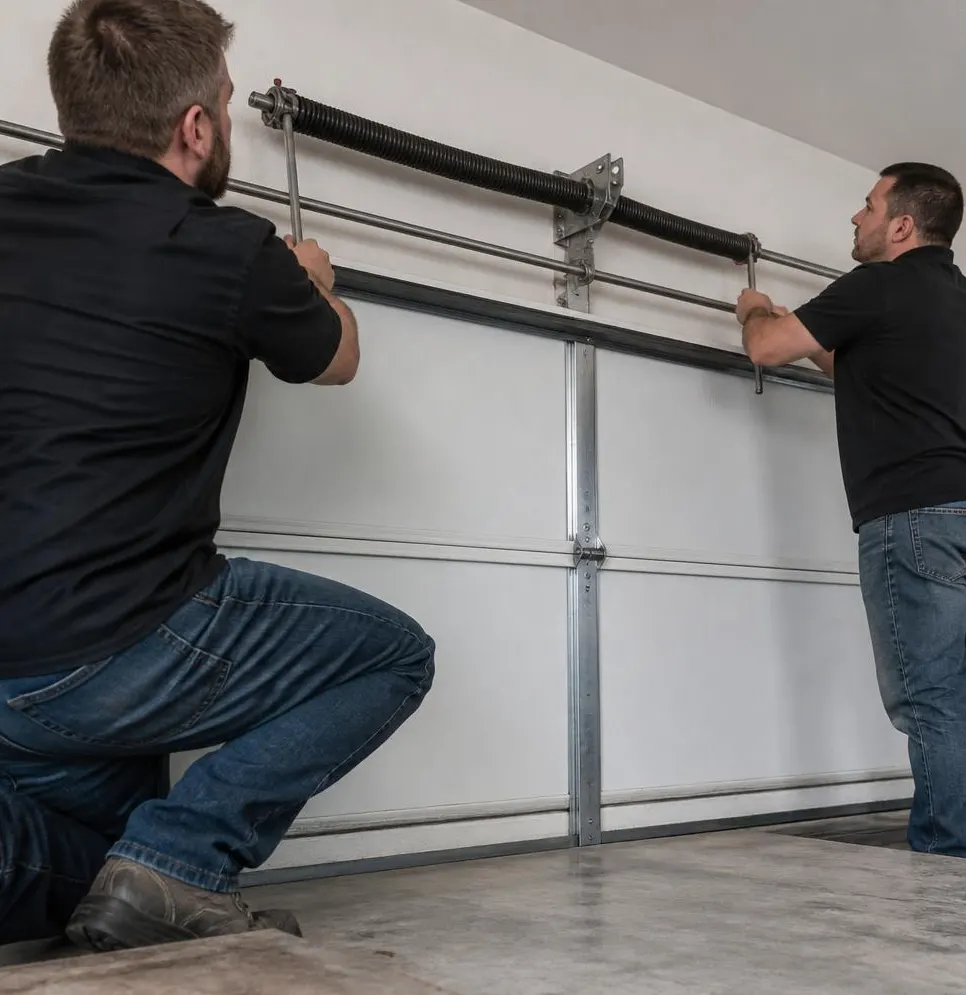
With the opener disconnected (pull the release cord), lift the door halfway by hand. It should stay in place on its own. If it drifts up or falls, the springs are losing tension — a common issue after a hot summer followed by a sharp cold snap — and that's not a DIY adjustment. While you're at it, look at the rollers and hinges. Nylon rollers that are chipped or worn, or hinges with visible rust, tend to bind up when metal contracts in cold weather, which is exactly when you don't want a door getting stuck halfway.
Lubricate the Moving Parts
Use a garage-door-specific lithium or silicone lubricant on the hinges, rollers, and the springs themselves. Skip WD-40 for this — it's a solvent, not a lubricant, and it washes away grease rather than replacing it. A quick application now keeps parts moving smoothly even after the first few cold mornings.
Confirm the Opener and Safety Sensors Work
Cold weather can make an aging opener motor work harder, and dust or grime that built up over summer can interfere with the photo-eye sensors near the floor. Test the auto-reverse function by placing an object in the door's path — it should stop and reverse immediately. If the door hesitates, reverses randomly, or the sensors' lights are flickering, that's worth addressing before you're relying on the opener during an ice event when you'd rather not be outside fiddling with it by hand.
If Your Garage Doubles as a Workspace or Storage
A lot of homes in the Mid-Cities area use the garage for more than parking — storage, a workbench, sometimes a home gym. If yours holds anything temperature-sensitive, an insulated garage door panel or added weatherstripping does more than block drafts; it keeps indoor temperature swings smaller when an overnight freeze hits. It's a bigger investment than a seal replacement, but it pays off if you're in the garage regularly through the colder months.
Build a Simple Pre-Winter Routine
- Inspect weatherstripping and seals for cracks or gaps
- Test door balance manually with the opener disconnected
- Lubricate hinges, rollers, and springs with the right product
- Test auto-reverse safety sensors
- Clear tracks of summer dust and debris buildup
- Look for rust starting on hardware exposed to humidity swings
Doing this once before the weather turns catches most problems while they're still minor and inexpensive to fix.
When to Call Hurst Garage Door
If the door won't stay balanced, the springs look stretched or rusted, or the opener's sensors aren't responding reliably, that's past the point of a DIY fix. Hurst Garage Door handles spring replacement and opener repair for homeowners across Hurst and the surrounding Mid-Cities area, and we'll check the whole system — tracks, hardware, seals, and opener — rather than just patching the one symptom you noticed. Routine garage door maintenance before winter is also one of the simplest ways to avoid an emergency repair call during the next cold snap or ice event.
If your garage door needs attention before winter sets in, call Hurst Garage Door — a garage door company in Hurst, TX ready to get it sorted before the next cold front rolls through.